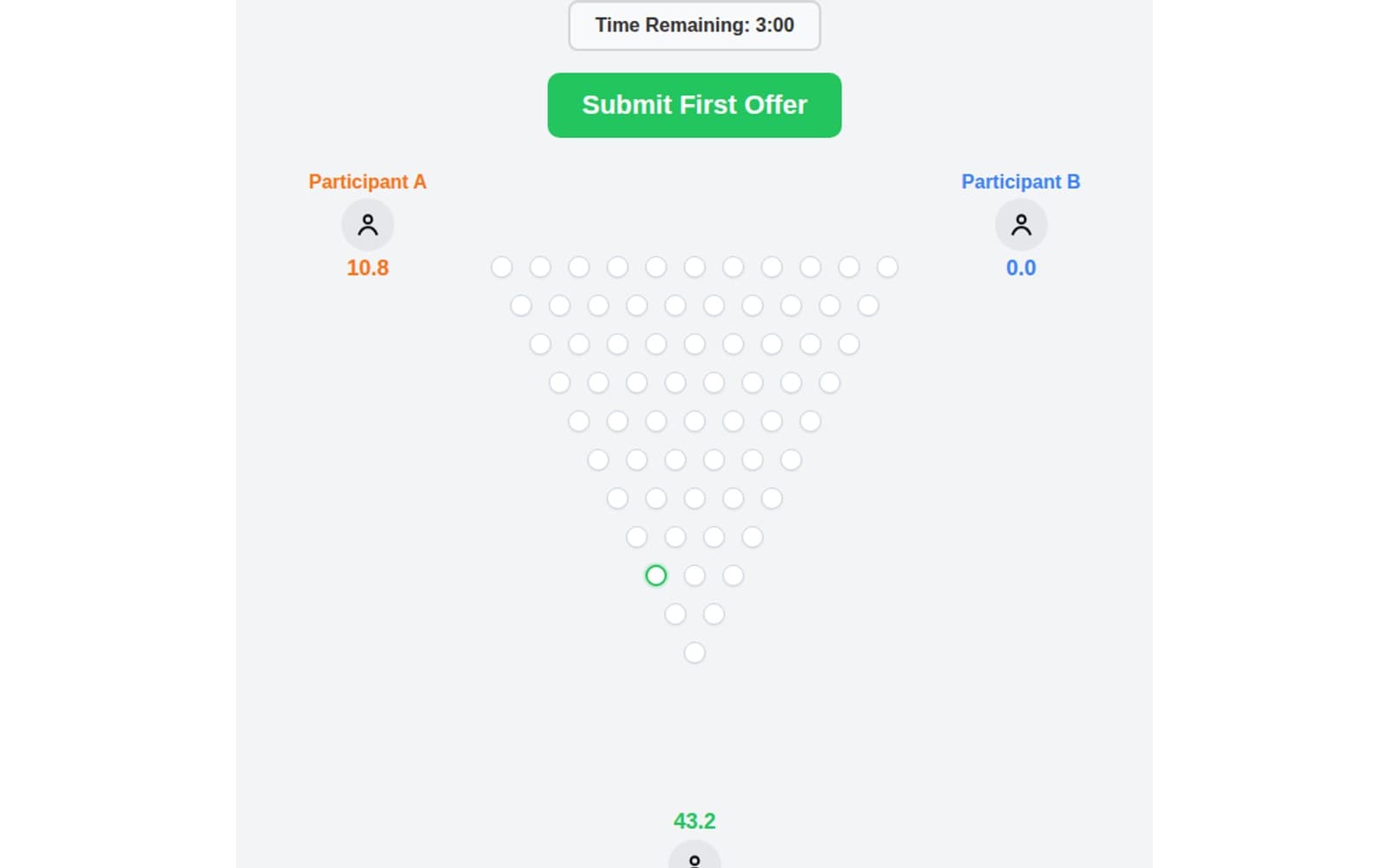
Bargaining Experiment
CompletedInteractive oTree experiment studying gender-based negotiation strategies with dynamic offers and real-time currency decay
Built under supervision of Prof. Andrzej Baranski
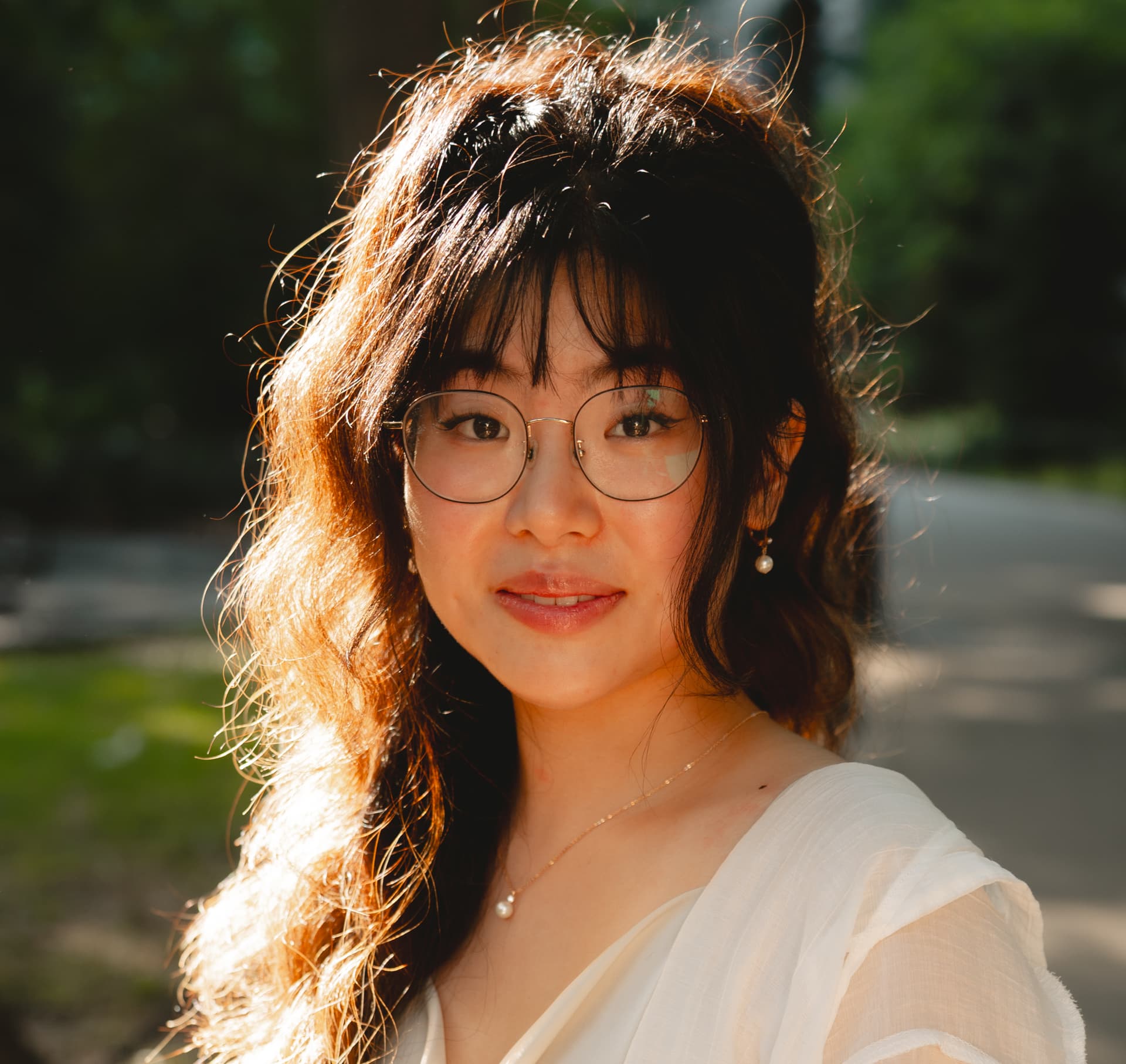
Portfolio
Incoming MSE Data Science Student at UPenn
About
Hi there, I'm Bailey!
I'm an incoming Master's student in Data Science at UPenn and recently graduated from NYU, where I studied Computer Science and Economics. Right now, I work at NEC Laboratories America building internal applications and automating processes for research and operations teams. This website is a collection of projects I've worked on, things I'm currently learning, and a few rabbit holes I've gone down along the way.
Work
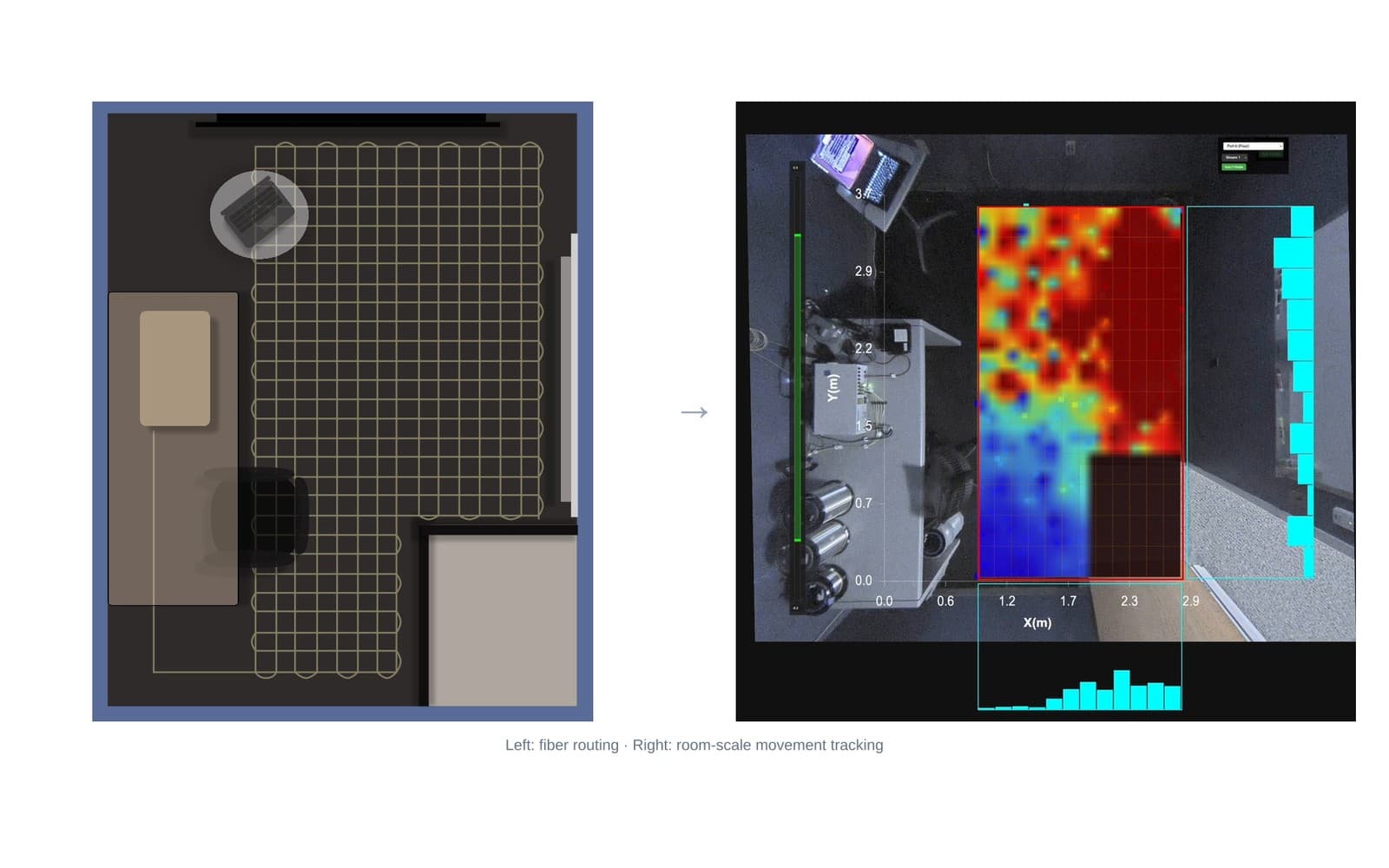
Replaced NEC's LabVIEW demos with a real-time web platform that turns high-volume distributed fiber sensing into room-scale visualizations for researchers and executives
Processed 10–20M sensing data points/sec across 230m of fiber
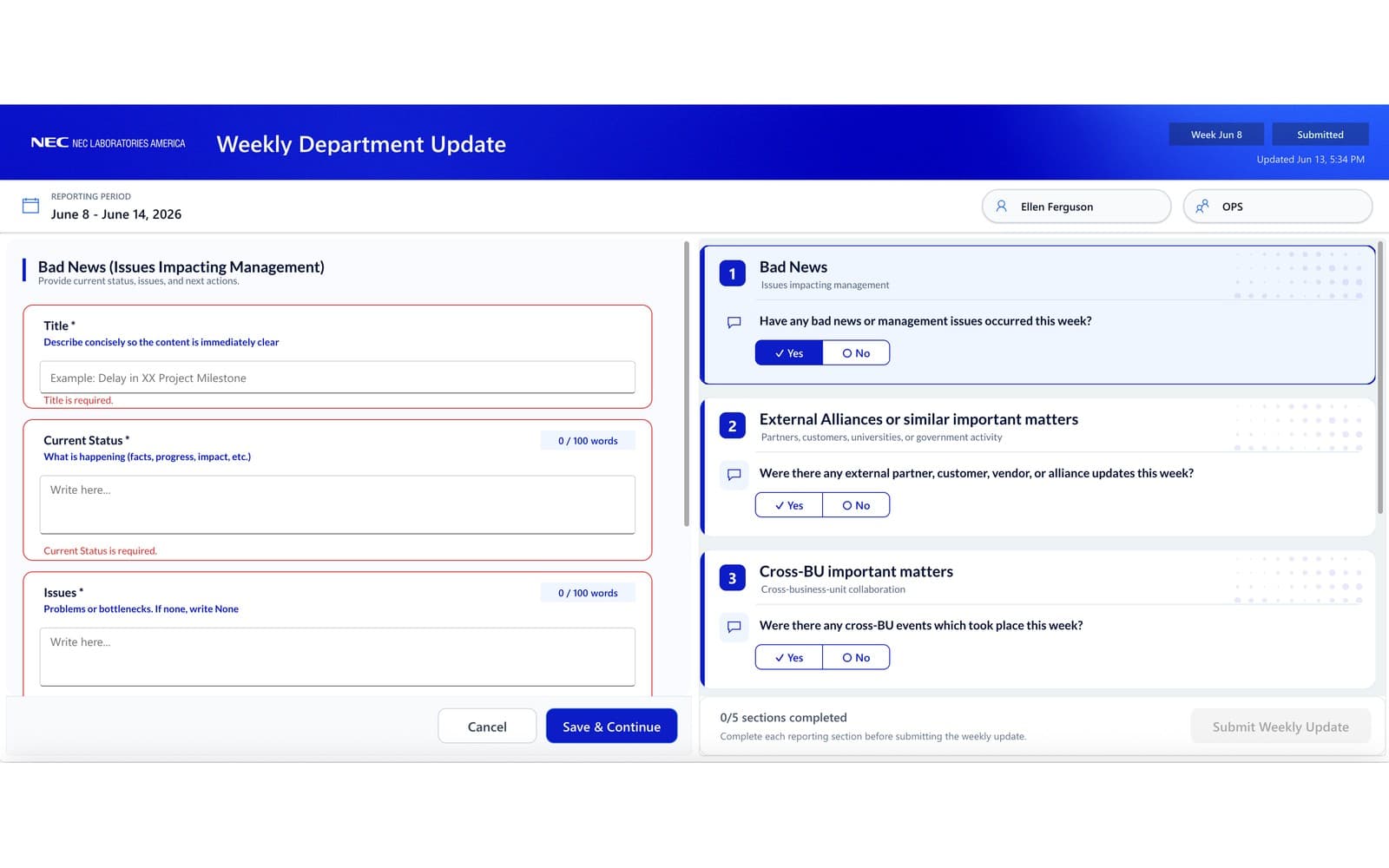
Power Apps and Power Automate system that standardizes weekly department reporting for NEC Laboratories America
Standardized reporting across 5 NLA departments

Full-stack MVP for planning externally funded research projects, labor, and incremental spend in one place
Centralized project, funding, and labor planning
Interactive oTree experiment studying gender-based negotiation strategies with dynamic offers and real-time currency decay
Built under supervision of Prof. Andrzej Baranski
Full-stack peer-support platform for nursing students with anonymous discussion, authentication, and moderation
Ranked 1st out of 15 software engineering teams
Full-stack web app connecting users with tax professionals through messaging, inquiries, and appointment booking
Built real-time messaging using WebSockets
Python OCR pipeline that extracts structured transaction data from visually laid-out bank and credit card PDFs
Parses statement transactions with layout-aware OCR
The first thing I ever built after taking my first computer science course was a maze game in Processing (PDE). Looking back, the code is pretty rough, but it introduced me to object-oriented programming, inheritance, game design, and the satisfaction of turning an idea into something people could actually interact with.
Curious? Check it out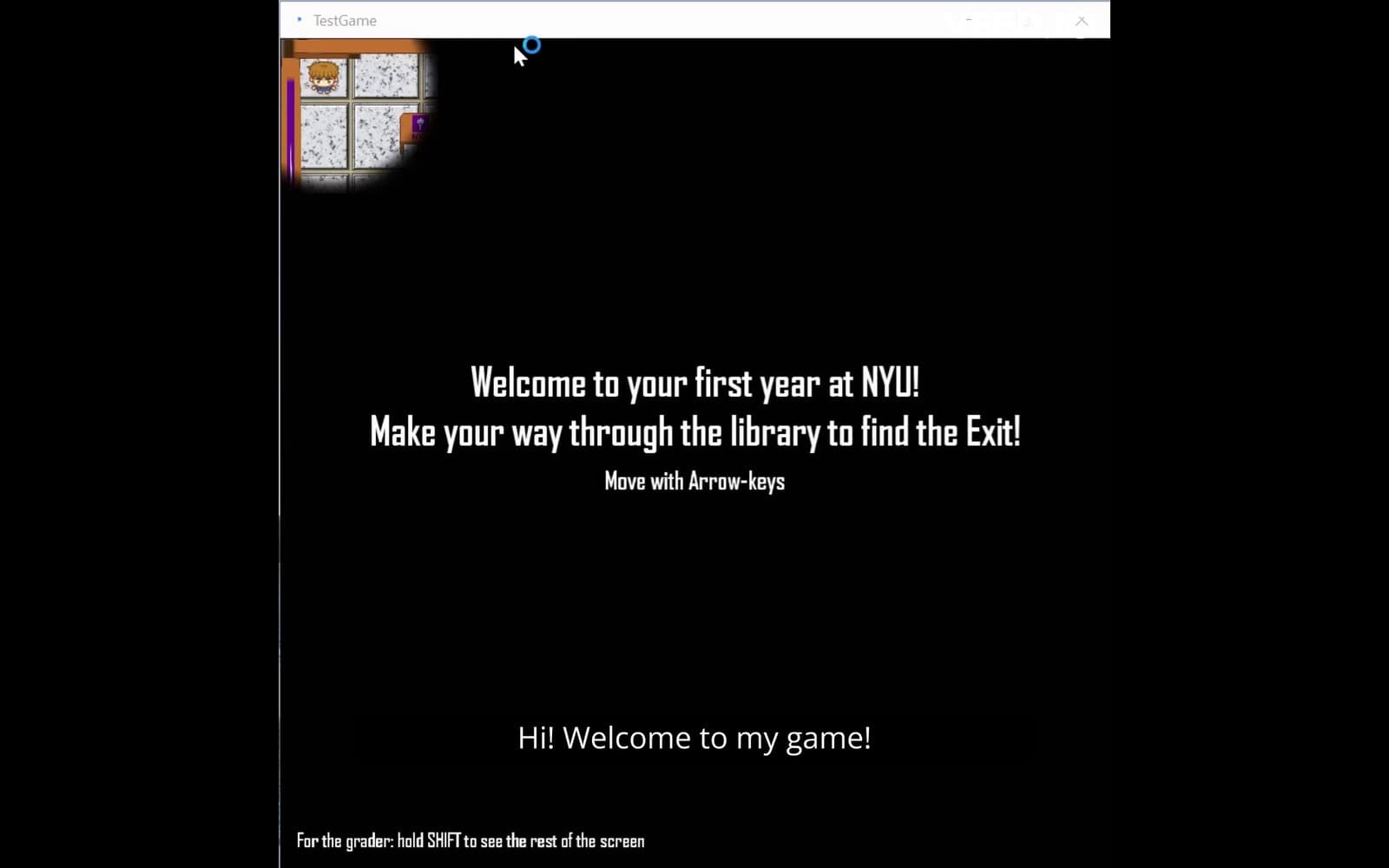
Personal
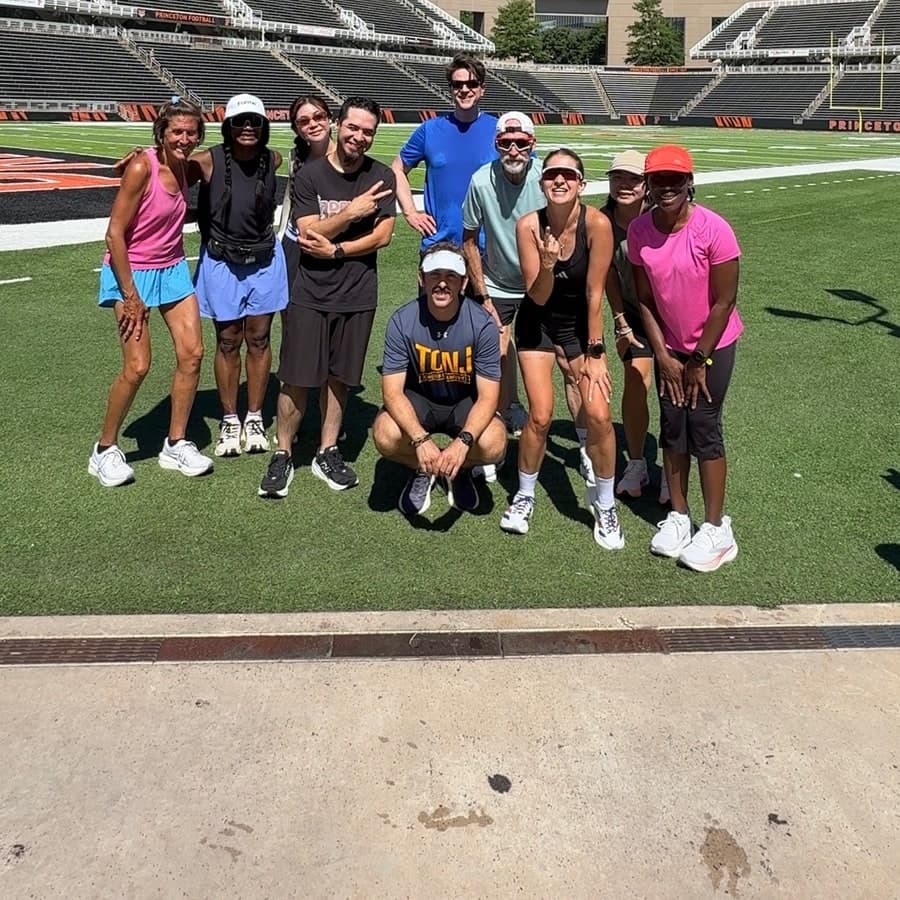
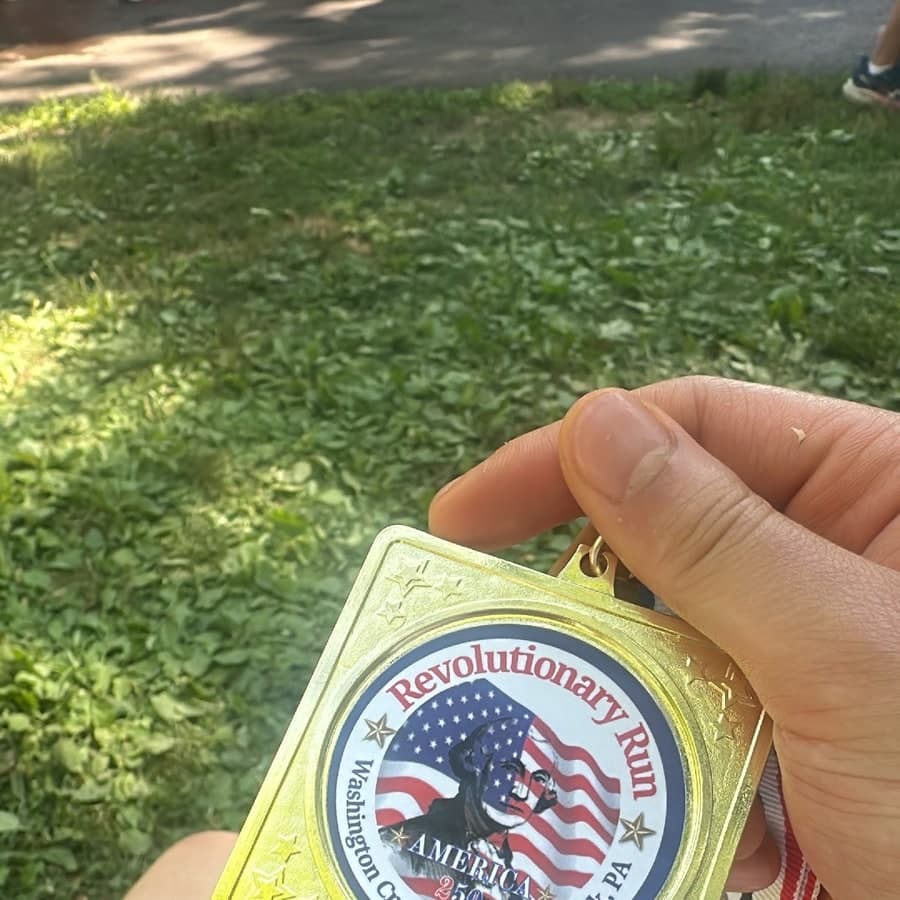
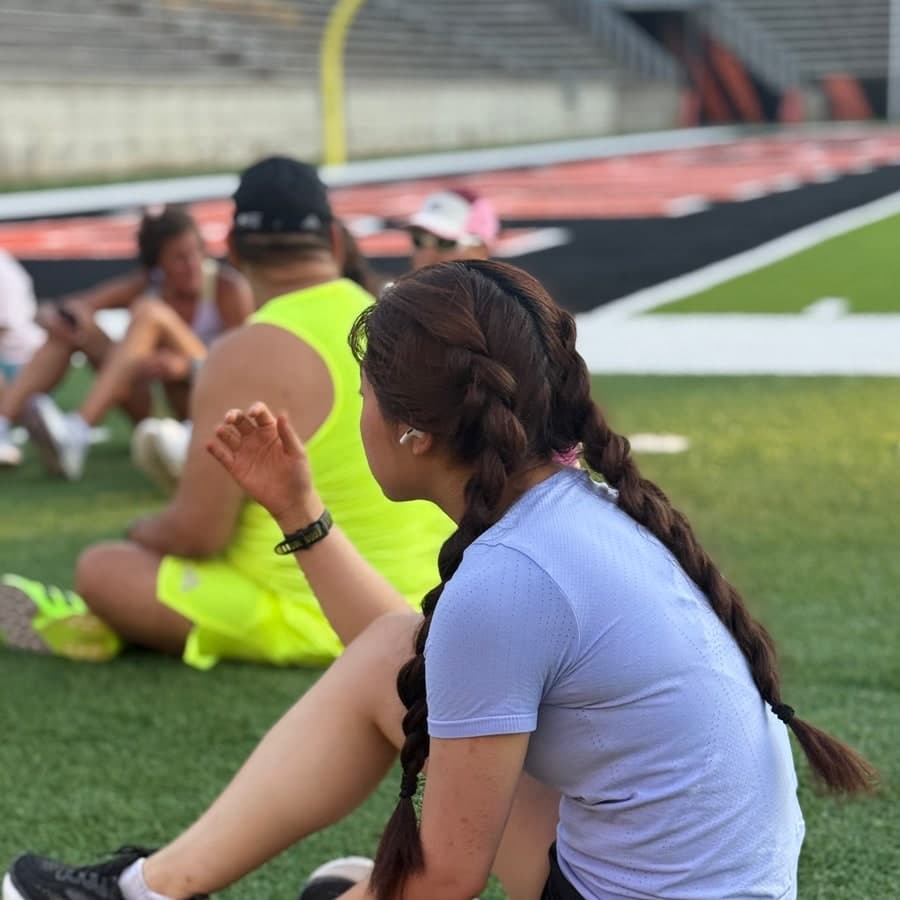
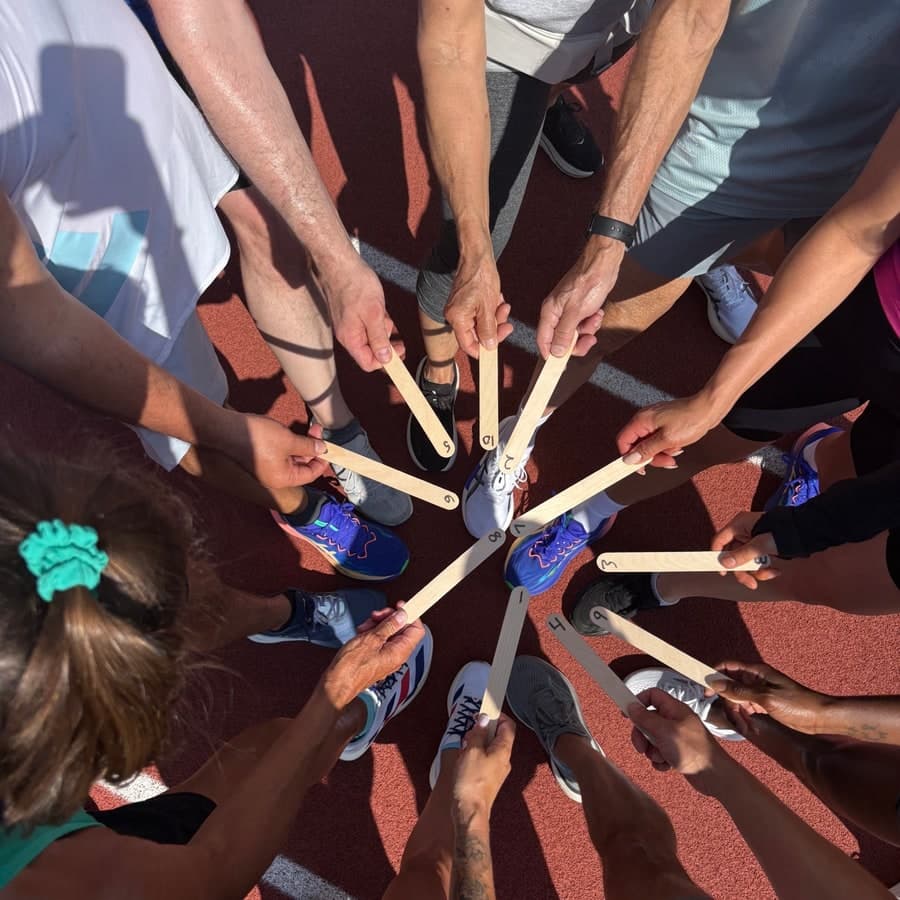
I'm currently training for the Toronto Waterfront Half Marathon in October 2026. Along the way I've joined Fleet Feet Princeton's running community, signed up for their upcoming mile race, and started exploring local group runs around Princeton and Philadelphia. Running has become one of my favorite ways to clear my head. It's one of the few times during the day where I don't feel like I have to solve a problem - I just have to keep moving. It's also introduced me to an incredibly welcoming community. I've met runners of all experience levels simply by showing up to local group runs, from people training for their first 5K to someone who had completed 27 marathons. One runner told me, "You just have to show up," and that has been my experience too. I enjoy hearing how different people train, what they've learned over the years, and the pieces of advice they pick up along the way
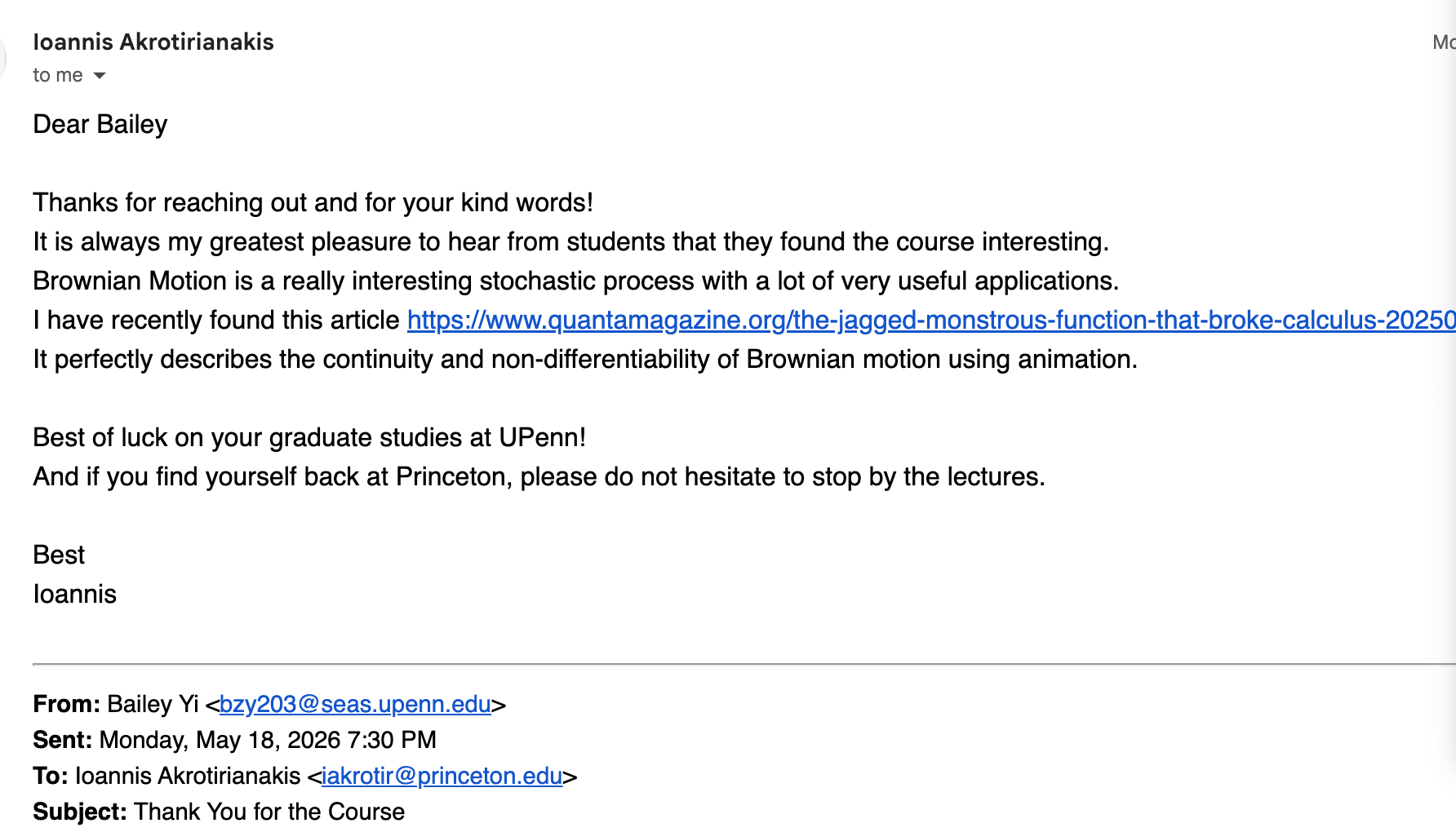
While working full-time at NEC, I audited Princeton's Stochastic Systems and Probability course. More recently, I was invited to sit in on EGR 395: Venture Capital and Finance of Innovation, a course that explores how investors evaluate startups, manage risk, and fund innovation.
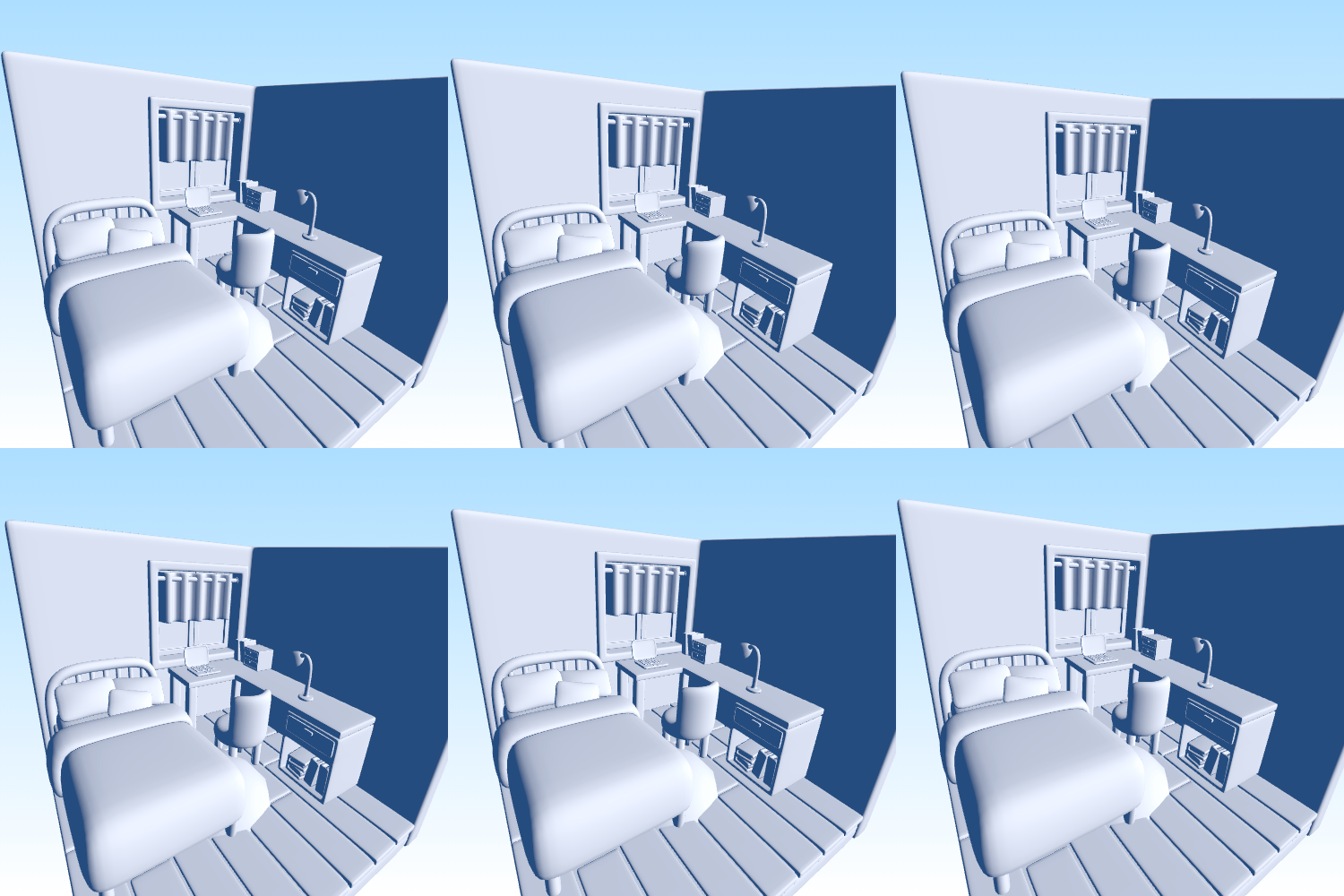
Recently I’ve been teaching myself Blender through small projects, including an animated room environment and a 3D recreation of NEC’s fiber sensing hardware.
FAQ
I actually started college as an Economics and Philosophy major. Then I took my first programming class and got completely hooked. I loved how immediate programming felt: you build something, and you can see the result right away. At the same time, I enjoyed economics because it forces you to think about incentives, tradeoffs, and decision-making. I ended up sticking with both because they complement each other surprisingly well.
The more I worked with real-world data, the more I realized that collecting data is often the easy part. Understanding what it's actually telling you is much harder. Working with sensor data, operational data, and research data made me want a stronger foundation in statistics, machine learning, and modeling, which ultimately led me to pursue a master's in Data Science.